

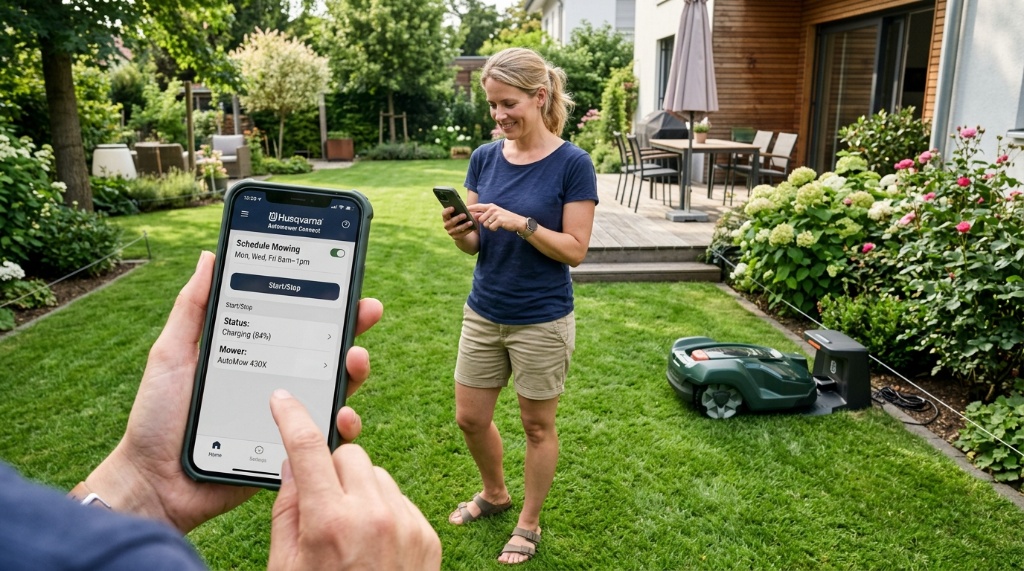
Picture a Saturday morning: the sun is out, the grass is dewy, and your neighbor is already pushing a mower in the heat. You, meanwhile, are still in the kitchen with a coffee. That contrast is becoming common in many neighborhoods, because robotic mowers have quietly moved from novelty to practical option. The shift raises a fair question: are they actually better than the mower in your garage? If you want to understand what a specific model looks like in real conditions, check this guide before deciding. Below is an honest comparison of cost, effort, results, and limitations.
Quick Answer
Robotic mowers win on convenience and consistent cut quality because they mow small amounts frequently instead of one large weekly session. Traditional mowers win on upfront cost, raw cutting power, and handling overgrown or very complex lawns. For a typical maintained residential yard, a robot can replace most push mowing. For heavy growth, steep slopes, or very irregular terrain, a traditional mower usually remains necessary.
Key Takeaways
- Robotic mowers save time and prevent grass from ever getting long, which improves lawn health and appearance.
- Their upfront cost is higher, but they reduce fuel, maintenance, and physical labor over time.
- They work best on lawns with clear boundaries, few obstacles, and routine trimming edges.
- Traditional mowers are still the better choice for overgrown grass, steep or rough terrain, and tight budgets.
- Many owners combine both: a robot for routine cutting and a traditional mower for edges, leaves, and cleanup.
What Actually Changes When You Switch to a Robot
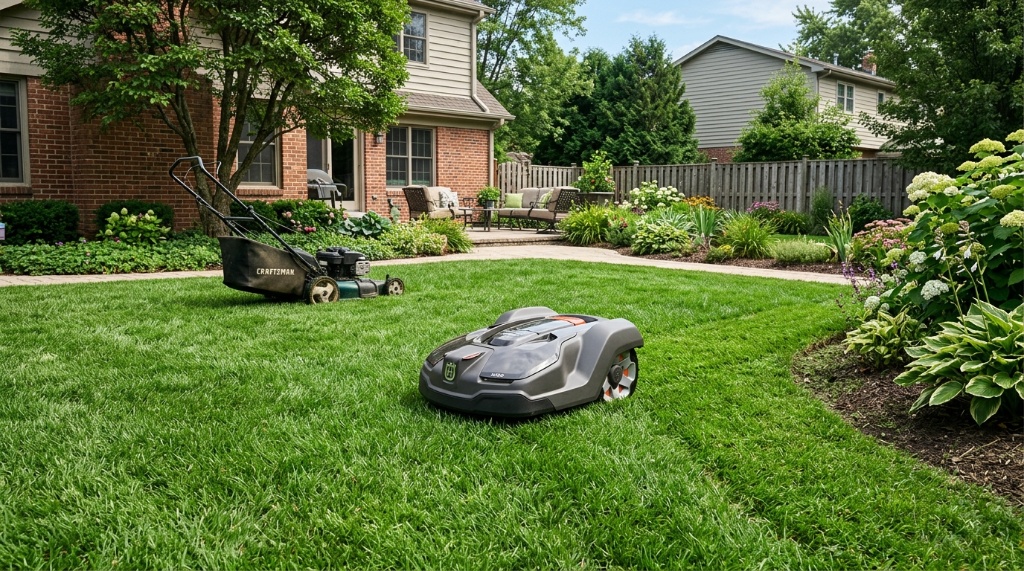
The biggest change is not the machine—it is the mowing philosophy. Traditional mowing removes a large amount of grass in one pass each week or two. Robotic mowers cut a tiny amount almost daily, so clippings are small enough to fall back into the soil as natural fertilizer. This frequent, light trimming keeps the lawn at a consistent height and reduces stress on the grass.
That difference shows up in the results. Robotic mowing tends to produce a denser, more even lawn because grass is never cut down drastically. Traditional mowing can scalp uneven areas, leave clumps, and stress the turf if the grass grew too long between cuts. The trade-off is that a robot needs to run regularly to work well; if you let the lawn grow for two weeks, it may struggle to catch up.
Cost Comparison: Upfront Price vs Ongoing Expense
Robotic mowers cost more at purchase, but the ongoing math is often more favorable than it first appears. Traditional mowers cost less upfront but consume fuel or electricity, need oil changes, spark plugs, blade sharpening, and often more frequent repairs. Robotic mowers use less energy, need minimal maintenance, and typically require only blade replacement and occasional cleaning.
| Factor | Robotic Mower | Traditional Mower |
|---|---|---|
| Upfront cost | Higher | Lower |
| Fuel or energy use | Very low | Moderate to high |
| Routine maintenance | Minimal | Regular oil, filters, blades |
| Time spent mowing | Near zero after setup | Weekly manual labor |
| Cut quality on maintained lawns | Consistently even | Good, but varies |
| Performance on overgrown grass | Poor | Strong |
Over several seasons, the savings in fuel, maintenance, and your own time can offset much of the higher purchase price. The calculation depends heavily on lawn size and how much you value your weekends.
Installation and Setup: What Nobody Mentions First
A robot does not simply drop onto the grass and start working. Setup is the part most buyers underestimate. Boundary wire models require laying a perimeter wire around the lawn, which can mean digging, stapling, and routing around flower beds and trees. Some newer models use GPS or camera-based navigation instead, which reduces installation work but may not suit every yard.
You also need a power source near the charging station, a relatively flat area for the dock, and clear boundaries so the mower knows where to stop. If your lawn has multiple disconnected zones, narrow passages, or heavy shade, setup becomes more involved. Plan for a few hours of initial work, or budget for professional installation if available, As you upgrade your outdoor routine with smart yard tech, you can also eco-optimize your indoor habits by exploring options like best zero-waste and plastic-free kitchen product alternatives.
Where Robotic Mowers Struggle
Robotic mowers are not universal solutions. They perform poorly on:
- Grass that has grown tall or gone to seed
- Steep slopes beyond their rated incline
- Very bumpy, rocky, or uneven ground
- Lawns cluttered with toys, hoses, and debris
- Complex layouts with many narrow zones
They can also be tripped up by rain-soaked ground, thick fallen leaves, and pets that leave obstacles behind. Most models handle light rain, but heavy storms and standing water are a problem. If your lawn regularly reaches these conditions, a traditional mower is more reliable.
Where Traditional Mowing Still Wins
Traditional mowers remain the better tool when you need power, control, and flexibility. They cut through overgrown grass, handle slopes and rough terrain, and let you adjust height instantly. They also work without setup, charging, or boundary concerns. For renters, small yards, or anyone on a tight budget, a basic push or gas mower is still the simplest path.
Edging, trimming, and blowing also remain manual tasks in most setups. A robot mows the main lawn area, but you still need a string trimmer for edges, walkways, and fence lines. That is why many owners keep a trimmer and sometimes a traditional mower for cleanup days.
Which Option Fits Your Situation?
Choose a robotic mower if your lawn is relatively flat, maintained, and free of heavy obstacles, and if you value your time more than the upfront savings. Choose a traditional mower if your lawn is overgrown, steep, irregular, or if your budget is tight. If you are unsure, start with your lawn’s shape and condition—those two factors predict the outcome more than brand or price.
Frequently Asked Questions
Do robotic mowers really save time?
Yes, once installed. The main time cost is the initial setup. After that, the mower runs on a schedule, and you only handle trimming, cleaning, and occasional maintenance.
Can a robotic mower handle a large lawn?
Many models support larger lawns, but runtime, charging cycles, and boundary complexity matter. Very large or multi-zone properties may need a higher-capacity model or additional planning.
Are robotic mowers safe around pets and children?
Most have lift and tilt sensors that stop the blades when the unit is picked up or tipped. Still, supervise pets and children, and keep the schedule clear of play times.
Do they work in the rain?
Most handle light rain, but heavy rain, standing water, and soft ground can cause issues. Many owners set rain delays or pause the schedule during storms.
What happens if the grass gets too long?
A robot may struggle or stall. Cut the lawn first with a traditional mower, then let the robot resume its routine.
Do I still need a traditional mower?
Often yes, at least for edges, overgrown areas, and seasonal cleanup. Many households use both tools for different jobs.
Conclusion
Robotic mowers are changing lawn care by trading upfront cost and setup for consistent results and reclaimed time. Traditional mowers remain the better fit for difficult terrain, overgrowth, and tight budgets. The practical answer for most homeowners is not either-or. Match the tool to your lawn’s condition and your priorities, and you will get better results with less frustration.
