

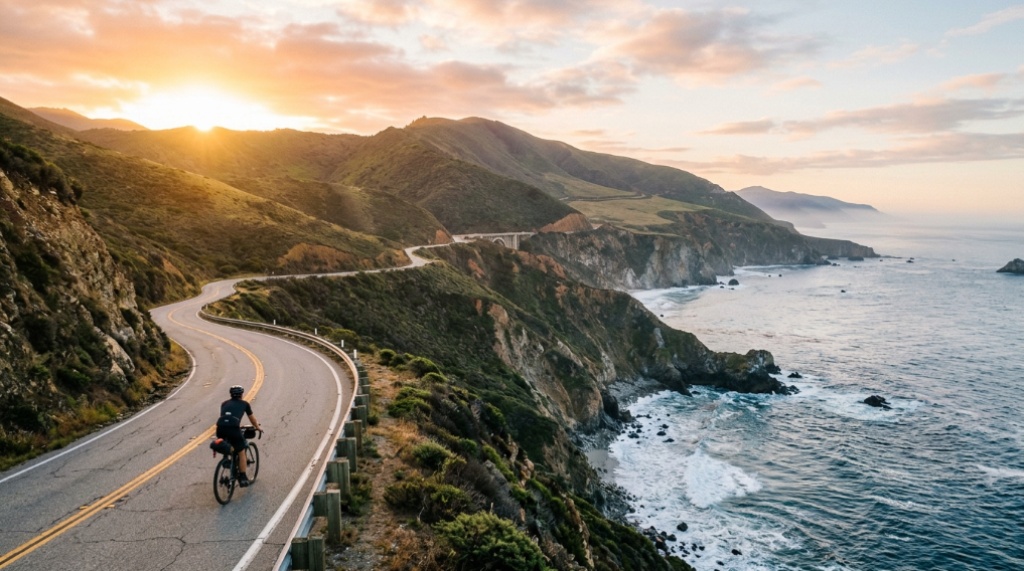
Few states serve up the range of riding conditions California does: a foggy morning on the coast, a triple-digit afternoon in the Central Valley, and a 7,000-foot climb in the Sierra, all within a single weekend. That variety is what makes long rides here memorable — and what makes underpreparing genuinely risky. Riders often focus on fitness and overlook the practical details: hydration strategy, sun protection, and gear that holds up over five or six hours in the saddle. Equipment choices matter as much as training, which is why many California cyclists pay attention to OutdoorXSports when dialing in comfort-critical gear. This guide covers what to plan, train, pack, and practice before a long ride in the Golden State.
Quick Answer
Preparing for a long bike ride in California means three things: build your endurance gradually with weekly long rides, carry more water and electrolytes than you think you need, and plan routes around weather, traffic, and resupply points rather than just distance. Layer sun protection, dress for temperature swings, and learn to eat and drink on the bike before ride day. Most riders are ready for a 50–60 mile ride after four to eight weeks of consistent, progressive training.
Key Takeaways
- California’s microclimates mean you should check conditions for your entire route, not just your start point — coastal fog, valley heat, and mountain cold can all appear on one ride.
- Increase your longest weekly ride by roughly 10 percent at a time, and treat one long ride per week as the anchor of your training.
- Aim to drink before you feel thirsty and eat 150–300 calories per hour on rides longer than two hours; waiting until you bonk is too late.
- Hand comfort, chamois care, and sun protection are the three most commonly neglected details on long rides, and each can end a ride early.
- Always carry a repair kit, a charged phone, and a plan for the section of your route with no services.
Plan Your Route Around California’s Realities
Distance is the least interesting number on a route sheet. In California, elevation gain, surface quality, and the spacing between water stops usually determine how hard a ride actually feels. A flat 80-mile ride through the Central Valley in July can be far more punishing than a 60-mile mountain loop with shade and cool air.
Study your route in three layers:
- Terrain and elevation: Look at total climbing and where the climbs fall. A 4,000-foot climb at mile 10 is a different ride than the same climb at mile 70, when your legs and your glycogen are depleted.
- Services and resupply: Identify every town, store, and water source. On rural routes — parts of the Sierra foothills, the deserts, and stretches of Highway 1 — gaps between services can exceed 40 miles. Know them before you ride them.
- Traffic and road conditions: Some popular coastal and canyon roads carry heavy weekend traffic and narrow shoulders. Early morning starts on weekends reduce both heat exposure and car volume.
Coast, Valley, Mountain, or Desert?
Each region demands a slightly different plan. Coastal rides bring fog, wind, and damp cool air even in summer — arm warmers and a wind vest earn their place. Valley routes mean intense, dry heat and irrigation traffic on farm roads. Mountain rides combine altitude, fast afternoon thunderstorms in the Sierra, and cold descents. Desert routes demand the most conservative water planning of all, plus awareness that cell coverage can disappear entirely.
Build Endurance Without Burning Out
The single most effective preparation is a weekly long ride that grows gradually. If you can comfortably ride 25 miles now, adding two to five miles per week to your longest ride is a sustainable progression for most riders. Jumping straight from 25 to 60 miles is the most common mistake and a reliable route to injury, exhaustion, or quitting halfway.
Pair that long ride with two or three shorter rides during the week. The shorter rides do not need to be hard — their job is to keep your legs familiar with the saddle and to accumulate time in your riding position. If you’re training for a specific event like a century, work backward from the date and give yourself at least eight to twelve weeks.
Two underrated training elements: practice climbing in the gear you’ll actually use on ride day, and practice riding in wind. California’s coastal headwinds and delta crosswinds can add an hour to a ride and drain energy faster than hills of similar length.
Hydration and Fueling Strategy
Heat illness is the most serious risk on California summer rides, and it is almost always preventable. The core rule is simple: drink on a schedule, not when thirst strikes.
| Ride Duration | Water Target | Fuel Target | Electrolytes |
|---|---|---|---|
| Under 1.5 hours | 1 bottle | Usually not needed | Optional |
| 1.5–3 hours | 1 bottle per hour | 150–250 calories/hour | Recommended in heat |
| 3+ hours | 1 bottle per hour, more in heat | 200–300 calories/hour | Essential |
These are general starting points, not prescriptions. Sweat rate varies enormously between riders and with temperature. A practical way to calibrate: weigh yourself before and after a one-hour ride where you track your fluid intake. Losing roughly a pound suggests about a pint of fluid deficit — that’s a signal to drink more on similar rides.
For food, mix quick carbs (gels, chews, bananas, dates) with something more substantial if your stomach tolerates it. Many riders discover on long rides that their gut rejects gels after hour four, so test your nutrition on training rides, not on the event itself.
Gear and Clothing for Long Days
Comfort details compound over five or six hours. A saddle or glove problem that’s barely noticeable at 20 miles becomes ride-ending at 70.
Priorities worth getting right:
- Bib shorts or chamois: Padded shorts designed for long-distance riding, worn without underwear, with chamois cream if you’re prone to chafing.
- Gloves: Padded palms reduce nerve pressure and hand numbness, and full-finger options protect against sun and road rash.
- Layers: A wind vest and arm warmers handle fog, descents, and early starts without bulk.
- Eyewear and sunscreen: UV exposure is intense at altitude and on reflective coastal roads. Reapply every two hours.
- Lights: A rear light improves visibility in fog and on shaded roads, and a front light matters if your ride may finish near dusk.
What to Carry on Every Long Ride
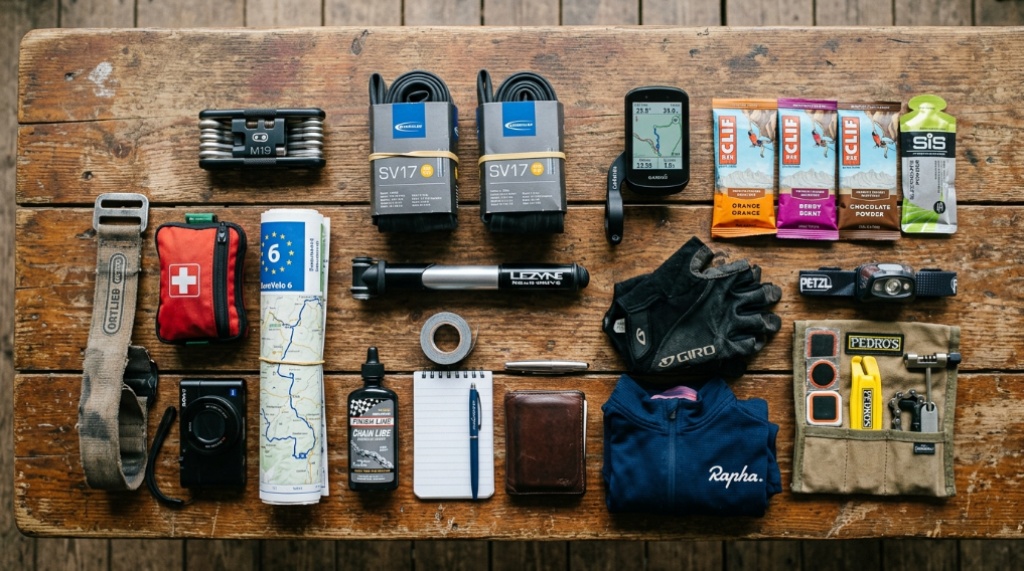
A basic kit covers the failures that actually strand riders: a spare tube or two (or a tubeless plug kit), tire levers, a mini pump or CO2 inflator, a multi-tool, a quick link for your chain, and a small first-aid kit. Add a power bank for your phone, and cash or a card for resupply. On remote routes, a lightweight emergency blanket and an extra bottle are cheap insurance, For readers looking to scale their physical endurance training or leverage digital tracking tools for athletic performance, check out our guide on advanced servers are supporting the expansion of AI computing.
Master Ride-Day Logistics
Long rides fail on logistics more often than on fitness. A few habits prevent most problems:
- Start early. In summer, finishing the hardest part of the ride before 11 a.m. avoids the worst heat and often the worst wind and traffic.
- Share your plan. Tell someone your route, expected finish time, and check-in points. Carry an ID and emergency contact information.
- Pre-plan bailout points. Know where the nearest transit stop, town, or friend’s house is along the route in case something goes wrong.
- Check the forecast the morning of. Coastal fog, afternoon thunderstorm risk in the mountains, and wind forecasts all change ride plans.
- Eat a real meal 2–3 hours before, and a light snack 30–60 minutes before. Starting a long ride under-fueled is a common and avoidable error.
Common Mistakes to Avoid
Certain errors show up again and again among riders preparing for their first long California ride:
- Testing new gear on ride day. New shoes, new chamois, or a new saddle on a long ride is a recipe for blisters and saddle sores. Break everything in beforehand.
- Ignoring the descent. Mountain and coastal descents can be cold and fast. A wind vest and gloves make a big difference.
- Overdressing at the start. If you’re warm in the first ten minutes, you’re overdressed for the rest of the ride.
- Underestimating time. Long rides in California often run longer than planned due to wind, heat, and elevation. Build in a buffer.
- Neglecting recovery. Rehydrate, eat protein and carbs, and sleep well after long rides to keep the next training week productive.
Frequently Asked Questions
How long does it take to train for a 50-mile ride in California?
Most riders who can comfortably ride 20–25 miles need roughly four to eight weeks of consistent training, including one progressively longer ride per week, to be ready for 50 miles. Hilly or hot routes require more preparation than flat, mild ones.
How much water should I carry on a long ride?
Carry at least two large bottles, and more on hot or remote routes where resupply is sparse. A practical target is one bottle per hour, adjusted upward for heat, intensity, and your personal sweat rate.
Is it safe to ride long distances alone in California?
It can be, with preparation. Share your route, carry a charged phone and repair kit, choose well-traveled roads, and avoid remote areas during extreme heat. Riding with at least one partner is generally safer for very long or remote routes.
What is the biggest safety risk on long California rides?
Heat illness is the most serious and most common risk, followed by traffic on narrow or heavily used roads. Riding early, hydrating consistently, and choosing routes with good shoulders or bike lanes reduces both.
Should I use electrolyte drinks or plain water?
For rides over about 90 minutes, especially in heat, an electrolyte drink helps replace sodium lost through sweat and supports better fluid absorption. Plain water plus salty snacks also works if that suits your stomach better.
How do I avoid saddle sores on long rides?
Wear well-fitted padded shorts without underwear, use chamois cream, keep the area clean and dry, and never increase ride distance too quickly. If a sore develops, take time off and treat it rather than riding through it.
Conclusion
Long rides in California reward preparation more than raw fitness. Build your endurance gradually, plan routes around real conditions, carry more water and repair gear than feels necessary, and protect your hands, skin, and sit bones with the right equipment. Start early, tell someone your plan, and test every piece of gear and nutrition on training rides before the big day. Do that, and a 60-mile day becomes a confident outing instead of a survival test.
